
Social Media

You can find me on the following social media platforms...

Muddy Faces

Big Moves Outdoors: 10 EYFS Activity Ideas

Our top 10 activity ideas that support physical development outcomes in the EYFS.

What's New

Introduction

Get some inspiration to help increase physical activity in your outdoor setting with this collection of activity ideas and versatile resources.

Outdoor active play provides endless opportunities for running, jumping, hopping, dancing, climbing & crawling all of which develop strengthen balance, coordination & negotiating space.

The accompanying 'find out more' links go to indepth pages exploring the theory and practice of different approaches, and the evidence for their benefits.


What you'll need

This activity has been provided by

Useful items from our shop

    Item available from our shop

    Environmental Considerations

    Consider the environmental impact of preparing, carrying out & completing this activity. Could this impact be reduced? Specific considerations for this activity could include:

    Health & Safety Considerations

    Follow your usual operating procedures and carry out appropriate risk benefit assessments.
    Some considerations particular to this activity include:

    1. Loose parts play

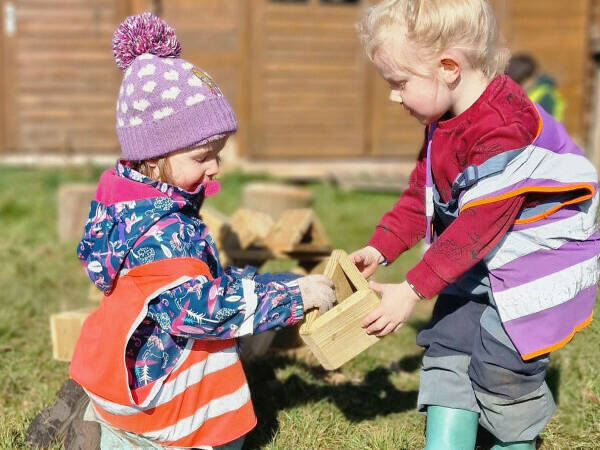
    Nursery aged children engaged in block play lifting and carrying hollow wooden blocks.

    Loose parts play (crates, tyres, planks, and movable materials) encourages children to:

    • Climb, balance, lift and build
    • Develop coordination and physical confidence
    • Stay active for longer periods during the school day
    • Engage in self-directed but physically demanding play

    When structured effectively, it becomes a powerful tool for increasing daily activity levels.

    Loose parts

    As well as being a lot of fun, loose parts resources are open-ended with many play possibilities for all ages from early years, primary through to adults. They are used to explore, question and experience, providing children with the resources required to follow their own interests in playful, innovative and creative ways.

    Read More about Loose parts
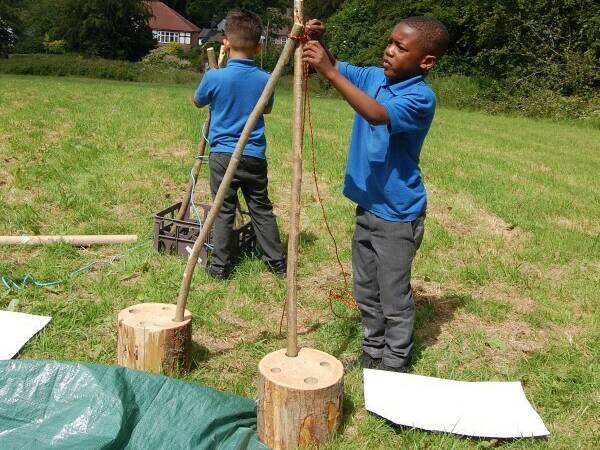
    2. Den building

    Two primary aged children exploring den play resources.

    Den building is fantastic for developing gross motor skills such as:

    • Strength & Coordination
    • Balance & Stability
    • Spatial Awareness
    • Coordiantion of Movements
    • Endurance & Physical Stamina

    Physical Play Benefits of Den Building

    Den building and den play supports children's physical development in so many different ways!

    Read More about Physical Play Benefits of Den Building

    3. Make a balance/obstacle course

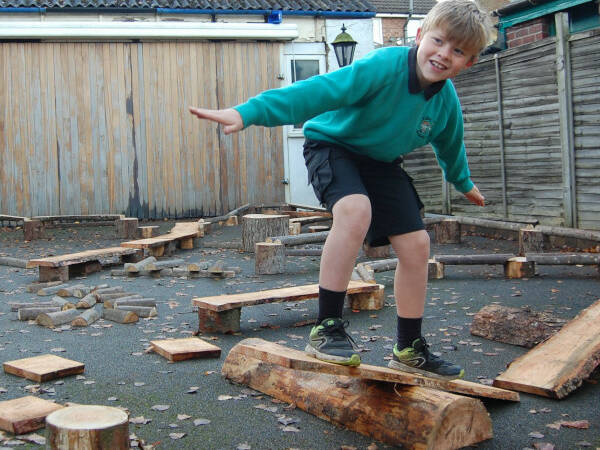
    School aged child balancing on a plank on a rustic wooden obstacle course.

    The great thing about obstacle courses is that children can create their own!

    Creating their own obstacle courses allows children to explore risk; engaging in "risky play" helps children understand their boundaries and develop a sense of power and independence.

    Manoeuvring obstacle courses made from loose parts promote balance, coordination and physical strength.

    4. Climbing over & crawling under

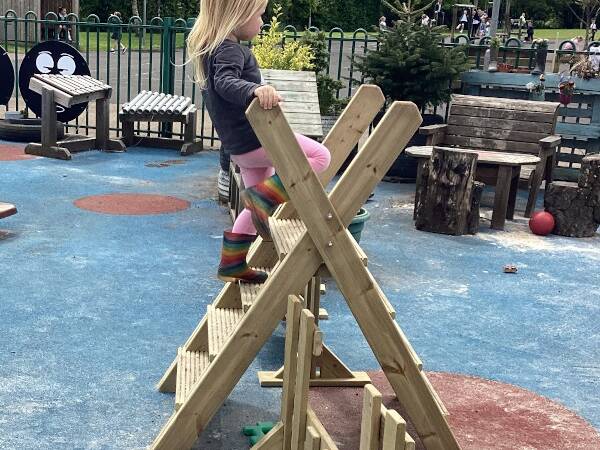
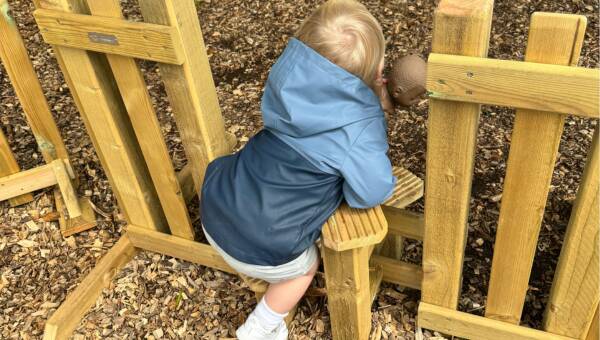
    School aged child climbing over a free-standing stile in a school playground.

    Climbing over objects and stiles and crawling through tunnels and crawling under lead children on journeys to different spaces.

    Read about the benefits here.

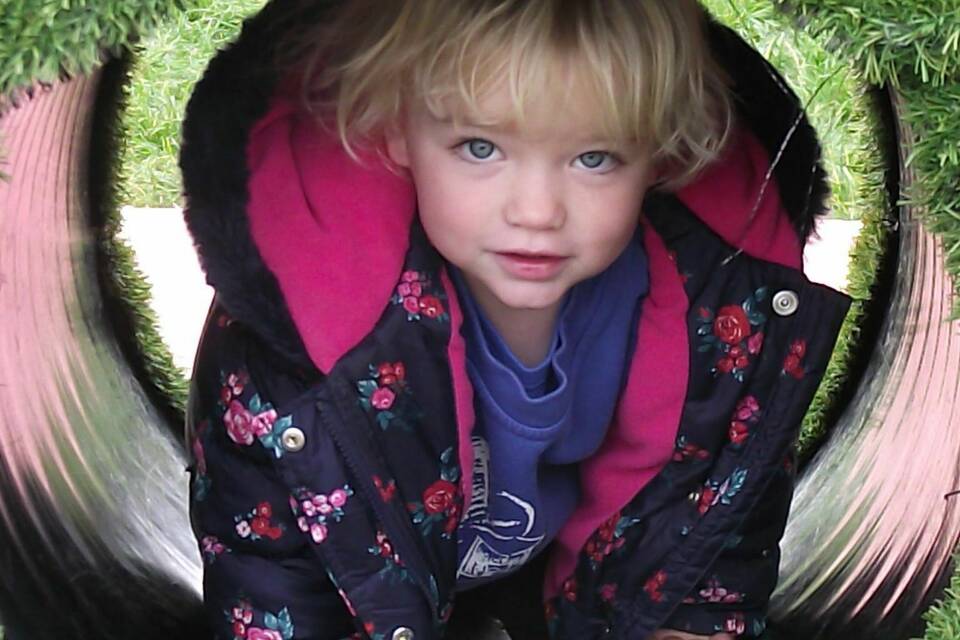
    Tunnels

    Active Boundaries: children in the Early Years (and of all ages) have an endless fascination with exploring boundaries; given the opportunity they will actively cross over, under or through them.

    graphic of the word 'through' with an arrow pushing through the 'o'

    Traversing through a tunnel offers a holistic and sensory-rich experience, as well as engaging various muscle sets as children bend and crawl. The senses come alive - feeling changes in texture, altered light, echoey or muffled sounds, smells and the airflow different from the open space.

    Tunnels can provide a mysterious journey, entering from one end and emerging somewhere new can create a portal for the imagination.

    Read More about Tunnels

    5. Jumping in muddy puddles

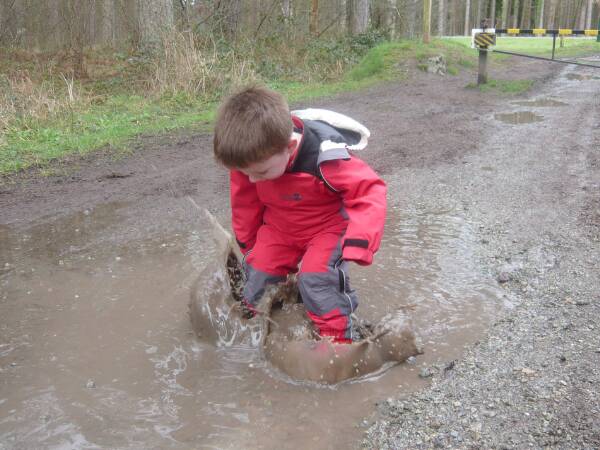
    Nursery aged child in waterproof clothing and wellies splashing in a muddy puddle.

    There's something instinctive about a child and a puddle and the research backs up what children already know. Puddle jumping is far more than messy fun.

    • Gross Motor Skills running, jumping, landing, balancing
    • Core Strength & Stability take-off and controlled landing engages the whole body
    • Cardiovascular endurance repeated jumping raises heart rate
    • Spatial awareness judging puddle size and jump distance

    6. Shadow dancing

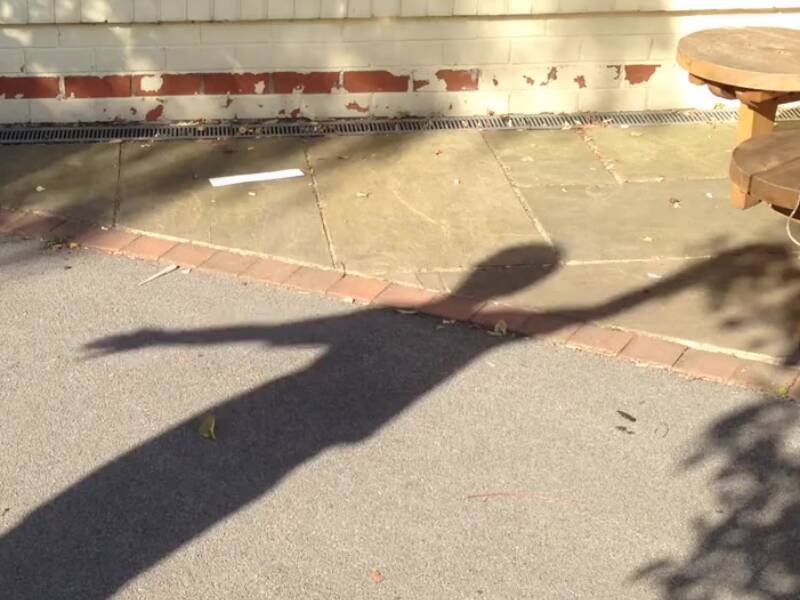
    Child's shadow engaged in shadow dancing activity.

    Dance provides an ideal platform for enhancing gross motor skills through rhythmic movements, footwork and body control. Mastering balance, spatial awareness, flexibility and muscle strength becomes achievable through repetitive practice.

    Just play some music outdoors and see what happens.

    It's even more fun to shadow dance! Next time the sun is out....

    7. Go on a scavenger hunt

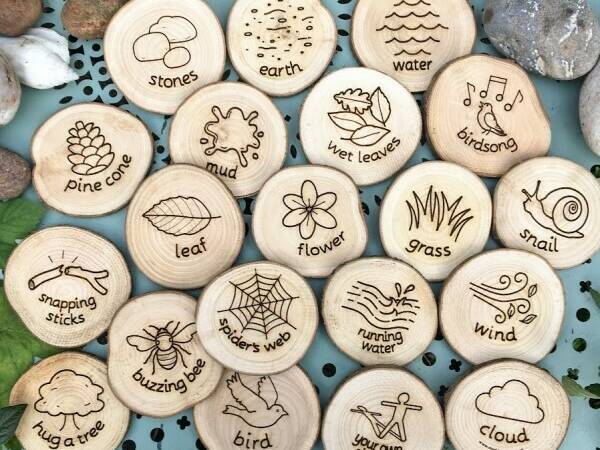
    A wooden nature scavenger hunt.

    A scavenger hunt creates the perfect 'hook' for keeping children engaged in a walk. It is a versitile activity that can be tailored for different developmental levels.Hunting for natures treasures and the motivationof finding the nest object keeps them moving and excited.

    When children hunt in pairs or small groups they negotiate, communicate, and physically cooperate; running together, lifting logs, pointing things out - in ways that structured PE rarely produces.

    8. Mud play

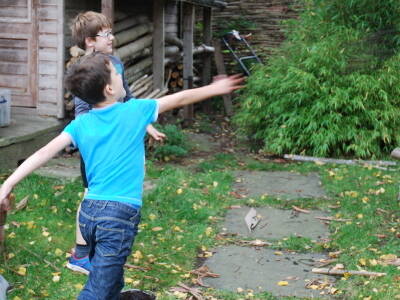
    Two children slinging mud balls at a tree in the garden.
    How mud play supports physical development:
    • Builds gross motor skills – digging, lifting, carrying, and mixing engage larger muscle groups
    • Improves hand–eye coordination – children learn to control movements while shaping and transporting mud.
    • Strengthens muscles – repetitive actions like shovelling and patting build strength in arms, hands, and core.
    • Enhances balance and stability – navigating uneven, slippery surfaces helps develop core stability and balance.

    9. Climbing trees

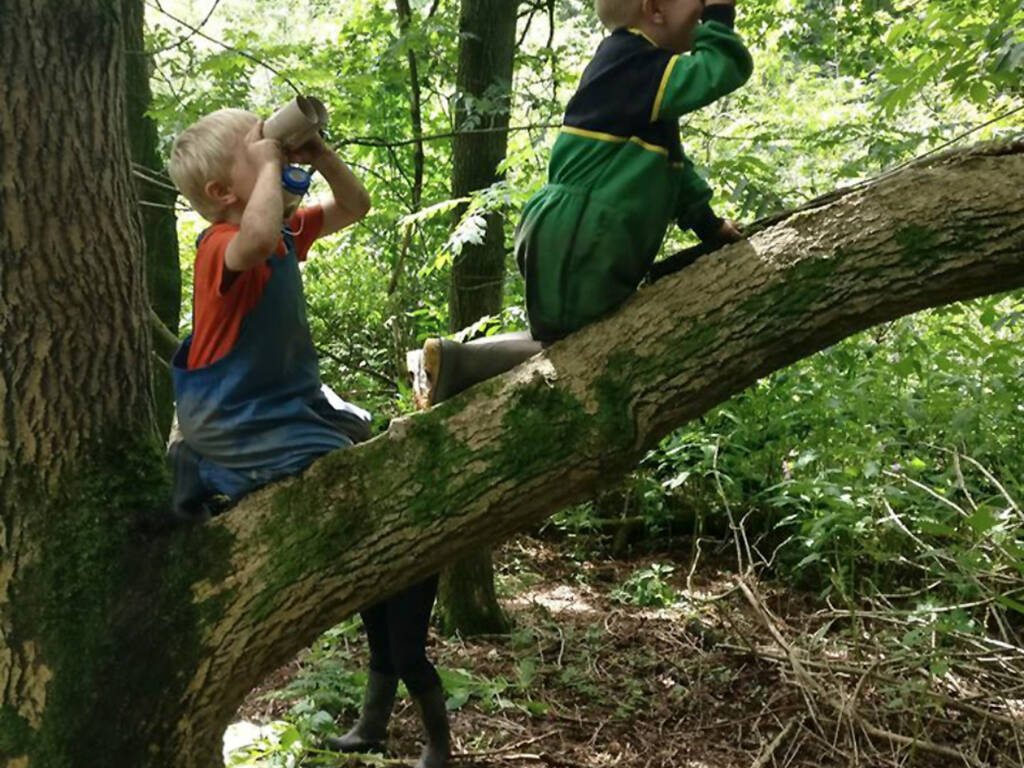
    Two children sat on the branch of a tree with binoculars looking around.

    Tree climbing is a brilliant way to support children’s physical development while they play. As they pull themselves up, balance on branches, and navigate different heights, they naturally build strength, coordination, and flexibility. It also helps improve balance, grip strength, and spatial awareness, all while boosting stamina through active, energetic play. Best of all, it feels like an adventure - so children stay engaged while developing essential physical skills.

    10. Games

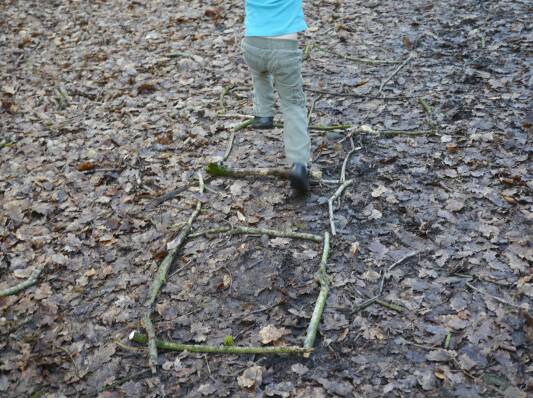
    Child playing on a woodland hop skotch made with sticks.
    • Ball games
    • parachute games
    • hop skotch
    • skipping games

    Find some of our fine motor skill activities below:

    Disclaimer: Muddy Faces cannot take any responsibility for accidents or damage that occurs as a result of following this activity.You are responsible for making sure the activity is conducted safely.


    Key Features

    Newsletter

    Keep in touch

    Register to receive our free email newsletter, full of outdoor inspiration, dates, deals and competitions.