Earthworm Survey
Discover the hidden world beneath your feet by searching for earthworms, counting your finds and learning how they support healthy soils and thriving ecosystems together.
Introduction
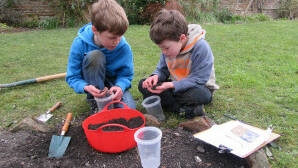
Encourage children to explore the natural world with this engaging Earthworm Survey activity. Perfect for use in school grounds, gardens or other outdoor learning environments, this hands-on resource introduces young learners to the fascinating role earthworms play in healthy ecosystems and soil science. The activity promotes nature connection, develops observation and data collection skills, and supports key areas of the science curriculum, including habitats, living things and environmental awareness.
What you'll need
- buckets
- towel
- large container/tub
- 1 litre bottle to fill with water (for dissolving mustard in)
- mustard powder
- vinegar
- printed copy of worm survey (download from website)
Lee Jowett

Useful items from our shop
- Stanley Pocket Tape Measures
- Child's Hand Trowel
- 15l Shallow Gorilla Tubs & Lids
- White Tray
- Trail Disc - Minibeasts - Worm
- Yucky Worms - Vivien French
Environmental Considerations
Consider the environmental impact of preparing, carrying out & completing this activity. Could this impact be reduced? Specific considerations for this activity could include:
- care of worm
- leave no trace
Health & Safety Considerations
Follow your usual operating procedures and carry out appropriate risk benefit assessments.
Some considerations particular to this activity include:
- hand washing
- choice of digging site
The Earthworm Watch was a citizen science project run by the Natural History Museum in partnership Earthwatch Institute and the Earthworm Society of Great Britain. It studied how human activities such as planting schemes, moving topsoil and adding fertilisers affects soils and earthworms, especially in gardens and other urban green spaces.
The Earthworm watch project is now completed but you can still conduct your own survey - see below - and read all about the results here.
Method:
The worm survey takes under an hour and involves digging two small holes to count earthworms and measure soil properties.
The survey should be done in spring or autumn, which is when earthworms are most active.
If you have your own mustard powder and vinegar available, you can download the Earthworm instruction booklet and Soil Chart.
Disclaimer: Muddy Faces cannot take any responsibility for accidents or damage that occurs as a result of following this activity.You are responsible for making sure the activity is conducted safely.
You might also like
Key Features
- Age Range 6+
- Duration Less than an hour
- Location Anywhere
- Season Spring
- Time of Day Daytime
-
Categories:
Curriculum Outdoors
science
Nature